
Software development has changed dramatically. Businesses today need technology that can respond quickly to changing customer expectations, evolving markets, new regulations, and increasing operational complexity.
Modern programming is the response. But it is not simply about adopting the latest programming language, framework, or development tool. It is about building software that aligns with business goals, adapts to change, and delivers measurable value.
The focus has shifted from simply writing code to solving business problems through intelligent, scalable, secure, and sustainable technology.
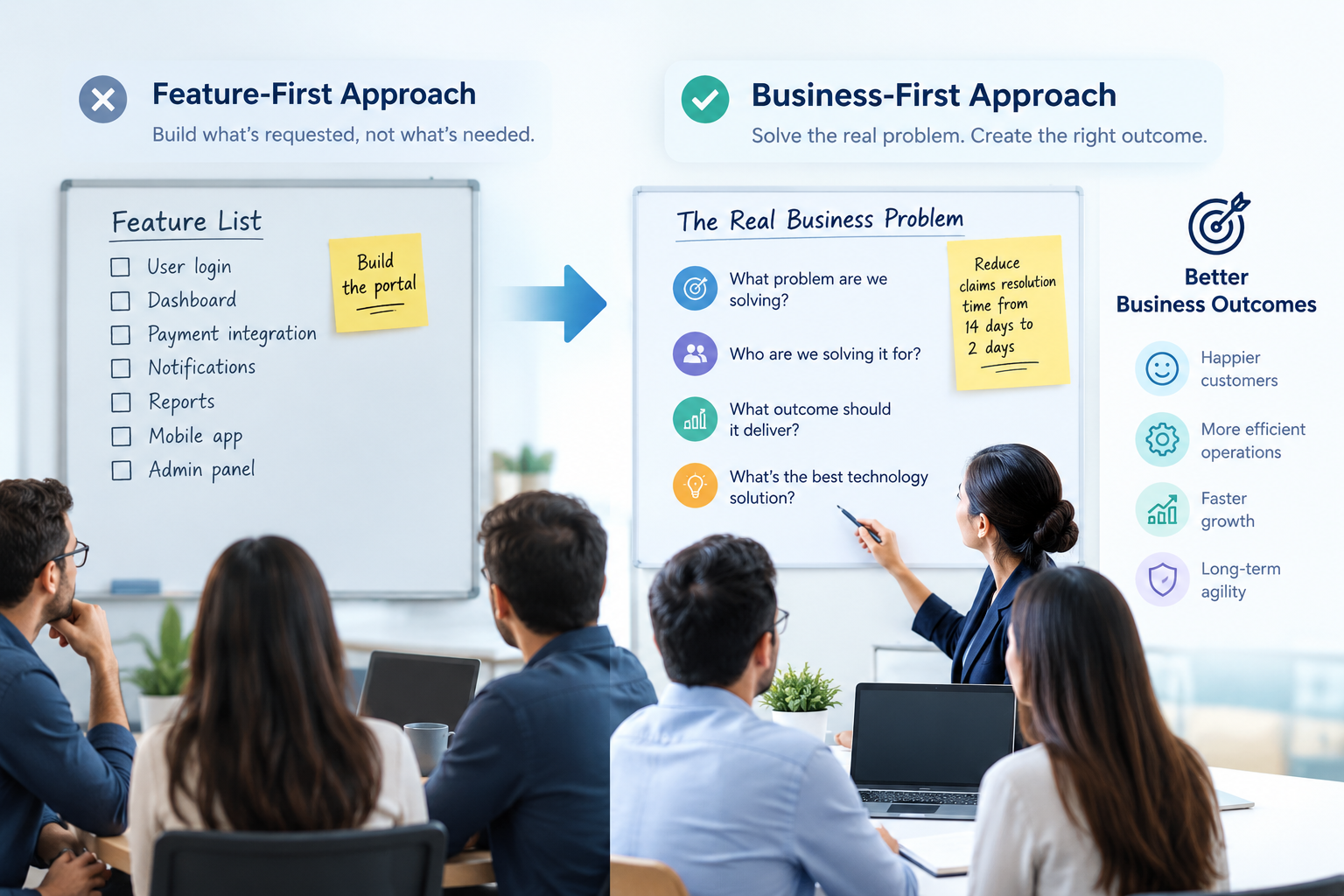
Traditional development often begins with a list of features and functions. Modern programming begins with a different question: "What business problem are we solving, who are we solving it for, and what outcome should it deliver?"
Consider an insurance company that asks for "a new claims portal." A feature driven team builds a portal. A modern team asks why claims are taking 14 days to resolve and where the process breaks down. If manual document review is responsible for most of the delay, the real solution may be an automated intake pipeline rather than a new user interface.
This shift helps prevent teams from building software that works technically but fails to move the business forward.
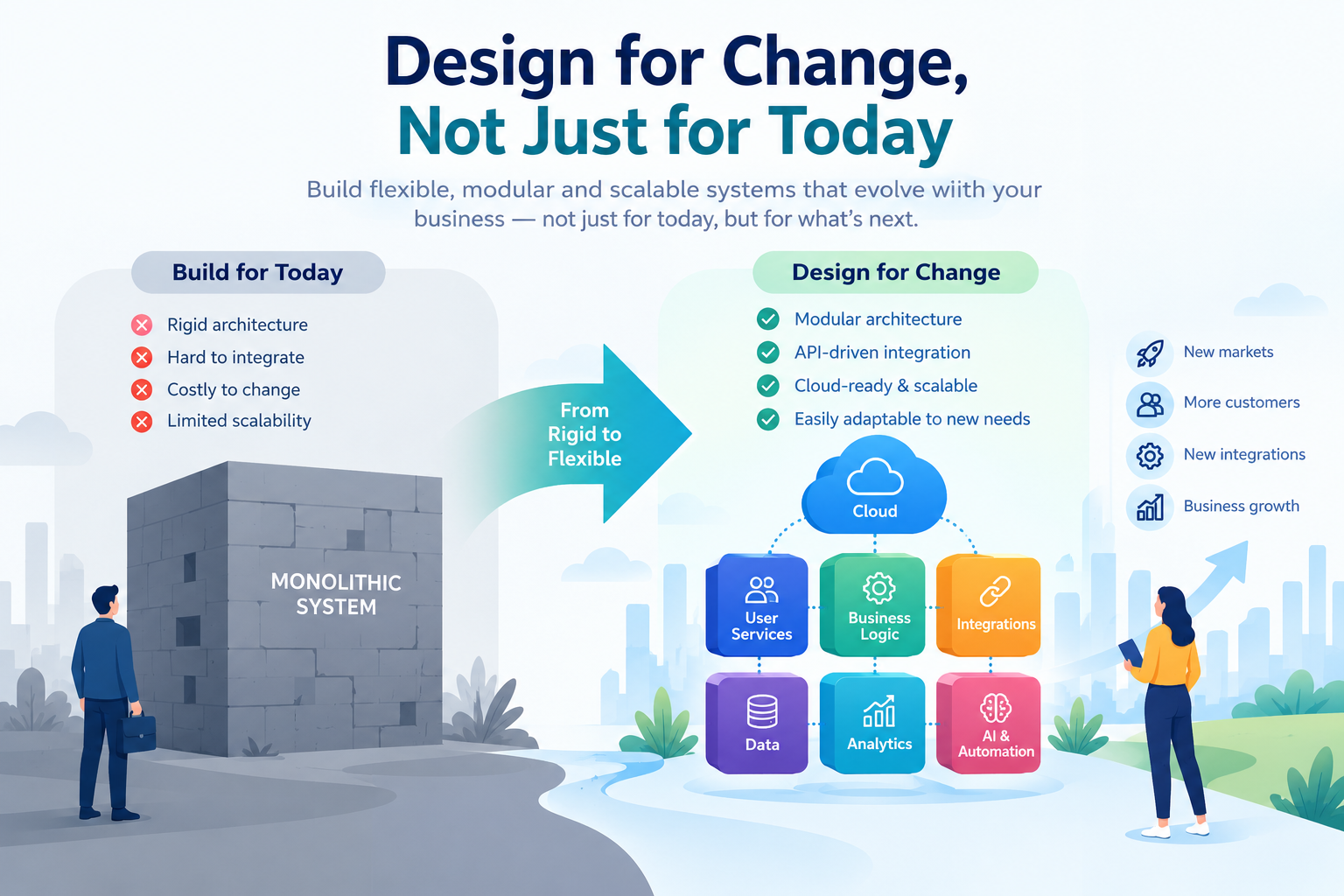
Business requirements rarely stay still. A system that handles today's workload may need to support new markets, integrations, products, or regulatory demands within months.
Modern programming addresses this through deliberate architectural choices: modular components that can evolve independently, API driven capabilities that can be reused across channels, and cloud services that provide flexibility and scale.
The goal is not complexity. It is flexibility systems that can evolve with the business instead of constraining it.
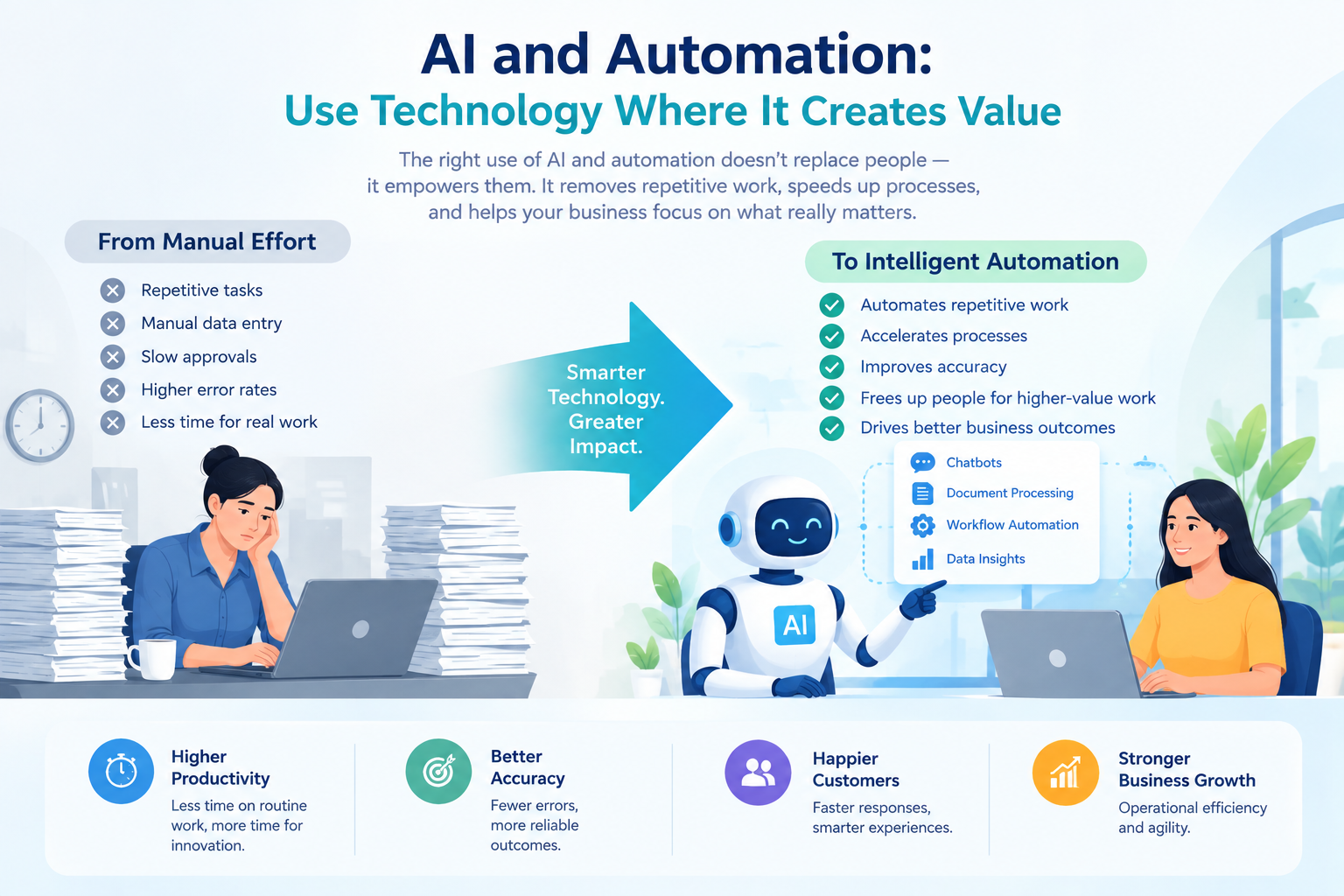
AI is reshaping both how software is built and what software can do. In development, AI can accelerate routine work such as generating code, creating test scaffolds, identifying issues, and improving documentation. In products, it can enable capabilities such as intelligent document processing, fraud detection, recommendations, and predictive insights.
However, modern programming treats AI as an engineering and business decision not a checkbox. Teams should consider accuracy, cost, data privacy, security, maintenance, and whether a simpler rule based solution would be more appropriate.
The same principle applies to automation. High volume, repetitive, and error prone activities should be automated where the return is clear, while people remain responsible for decisions that require context, judgment, and exception handling.
Build Security, Quality, and Integration In
Security and quality should not be final gates before release. Modern teams build them into the development lifecycle through secure design, dependency and security scanning, automated testing, performance validation, accessibility checks, monitoring, and observability.
Integration is equally important. Most businesses operate across CRM, ERP, finance, HR, marketing, analytics, and custom applications. APIs, eventmdriven architecture, and shared data capabilities help these systems work as a connected ecosystem rather than isolated silos.
The result is technology that is easier to change, safer to operate, and better connected to the business.
The Developer's Role Is Evolving
Writing code remains important, but modern developers increasingly need to understand the business context behind what they build. They participate in problem definition, challenge assumptions, make architectural trade-offs, and consider operational outcomes not just feature delivery.
AI amplifies this shift. As routine coding becomes faster, the differentiating skill becomes knowing what to build, why it matters, and how to validate that it creates value.
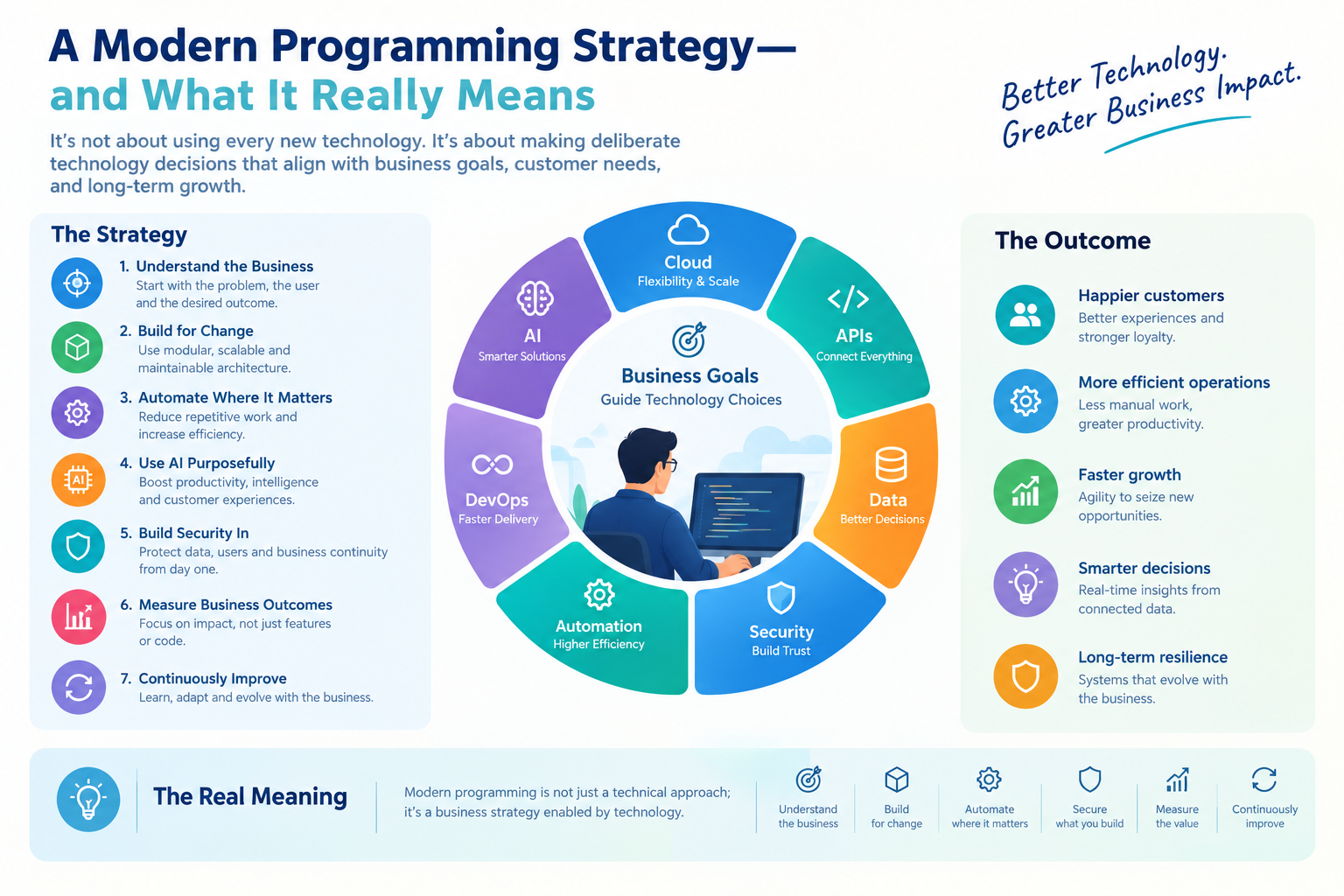
A modern programming strategy is not a technology shopping list. It is a set of deliberate decisions driven by business priorities.
- Define the outcome first. Start with the business problem, target metric, and measure of success.
- Design for change. Use appropriate architecture and modularity so the solution can evolve as requirements change.
- Automate where the value is clear. Prioritize repetitive, high volume, and error prone activities.
- Adopt AI purposefully. Evaluate business value, accuracy, cost, privacy, security, and maintenance before introducing it.
- Build security and quality in. Make testing, security, and observability continuous engineering practices.
- Measure business impact. Focus on outcomes such as faster processing, lower errors, better customer experience, reduced cost, and faster time to market.
What Modern Programming Really Means
Modern programming is not about using every new technology. It is about making better technology decisions.
Sometimes the right answer is a new cloud native application. Sometimes it is improving an existing platform, exposing an API, automating a process, integrating systems, or introducing AI into a specific workflow. The technology should serve the requirement, not the other way around.
Modern programming brings software engineering closer to business strategy. It combines engineering discipline, automation, integration, AI, security, and continuous improvement to build technology that adapts as the organization evolves.
The goal is no longer simply to build software and release it. The goal is to build technology that continuously creates business value and to have the discipline to measure whether it does.
Modern programming is not about writing more code. It is about building the right technology, in the right way, for the right business outcome.
Modern programming is not about using newer technology. It is about using technology differently, starting with business outcomes, designing for change, automating intelligently, integrating systems, building security and quality into the lifecycle, and continuously measuring the value software creates.